
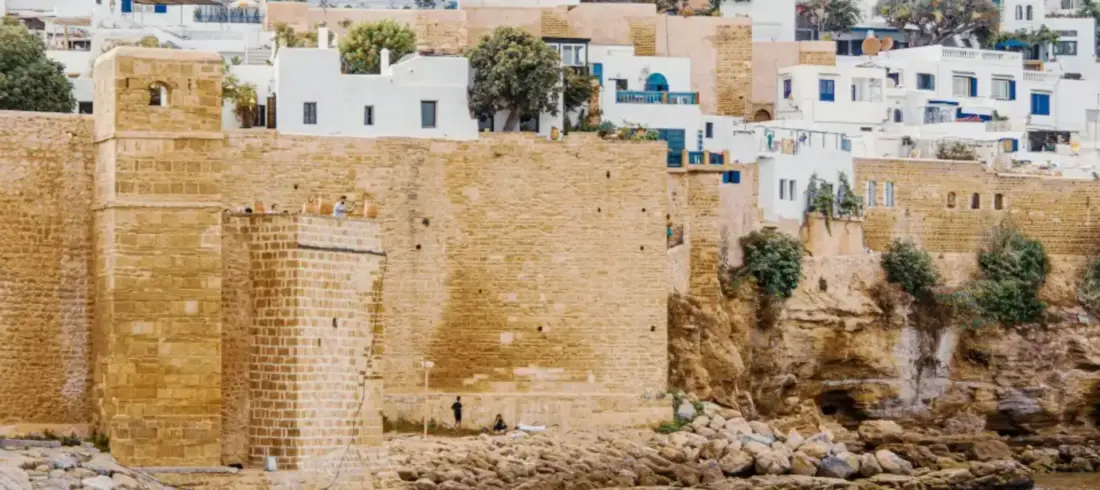
Kasbah des Oudayas

Kasbah des Oudayas Rabat Morocco historic fortress overlooking the Bou Regreg River and the Atlantic Ocean

Introduction to Rabat’s Historic Kasbah

Kasbah des Oudayas is one of the most beautiful and famous places to visit in Rabat, the capital of Morocco. This historic fortress stands at the mouth of the Bou Regreg River, where the river meets the Atlantic Ocean. Because of its rich history, peaceful atmosphere, and unique architecture, it attracts many travelers from around the world.

Kasbah des Oudayas Rabat is well known for its narrow streets, blue and white houses, and stunning views of the ocean. As a result, it has become one of the most important Rabat historical sites and a must-see attraction for visitors exploring the city.

In addition, the Kasbah of the Oudayas offers a beautiful mix of history, culture, and traditional Moroccan architecture. Walking through its small streets feels like traveling back in time. Today, many visitors come here to enjoy the peaceful gardens, take photos of the blue walls, and admire the beautiful coastal views.

Architecture of Kasbah des Oudayas

Kasbah des Oudayas Rabat is famous for its unique architecture that combines history, culture, and beautiful coastal scenery. This historic fortress was first built in the 12th century during the Almohad dynasty. At that time, the kasbah served as a strong military fortress protecting the entrance of the Bou Regreg River and defending the city from possible attacks coming from the Atlantic Ocean. Because of this strategic location, Kasbah des Oudayas Rabat Morocco became an important defensive point in the history of Rabat.

One of the most impressive architectural elements is Bab Oudaia, the monumental gate that forms the main entrance to the fortress. This large stone gate reflects the powerful Almohad architectural style, with its massive walls, large arches, and geometric decorations. Even today, the gate helps visitors understand the Kasbah des Oudayas history and its role in protecting the city centuries ago.

Later, in the 17th century, the character of the Kasbah of the Oudayas changed when Andalusian families settled in the area after leaving Spain. As a result, the kasbah slowly transformed from a military fortress into a peaceful residential neighborhood. These Andalusian influences are still visible today in the architecture of the houses, the narrow streets, and the traditional courtyards.

The streets of Kasbah des Oudayas Rabat are now known for their white houses, blue doors, and small windows decorated with flowers. Walking through these quiet alleys feels like traveling back in time, and many travelers enjoy exploring the streets and taking beautiful photos.

From the terraces of the kasbah, visitors can also enjoy panoramic views of the Atlantic Ocean, the Bou Regreg River, and the nearby city of Salé. Because of its history, architecture, and stunning scenery, the kasbah remains one of the most fascinating landmarks in Rabat.
History of the Oudayas Fortress

Kasbah des Oudayas has a long history that dates back many centuries. This historic fortress stands at the entrance of the Bou Regreg River where it meets the Atlantic Ocean. Because of this strategic position, Kasbah des Oudayas Rabat played an important role in protecting the city and controlling maritime routes along the Moroccan coast.

The first construction of Kasbah des Oudayas began in the 12th century during the Almohad dynasty. The Almohads built strong defensive walls, watchtowers, and the monumental gate known as Bab Oudaia. These structures were designed to defend Rabat from attacks coming from the ocean. As a result, Kasbah des Oudayas Rabat Morocco became an important military fortress and a key defensive point for the city.

In the 17th century, the character of the Kasbah of the Oudayas changed when Andalusian families settled there after leaving Spain. Because of this migration, the fortress gradually transformed from a military stronghold into a residential neighborhood. These families brought their traditions, culture, and architectural style, which shaped the unique atmosphere of the kasbah.

Today, the narrow streets, blue and white houses, and traditional doors reflect this strong Andalusian influence. Because of its rich heritage and scenic location, Kasbah des Oudayas Rabat Morocco is now one of the most important cultural landmarks in the capital and an essential stop for travelers exploring Rabat and its historic sites.

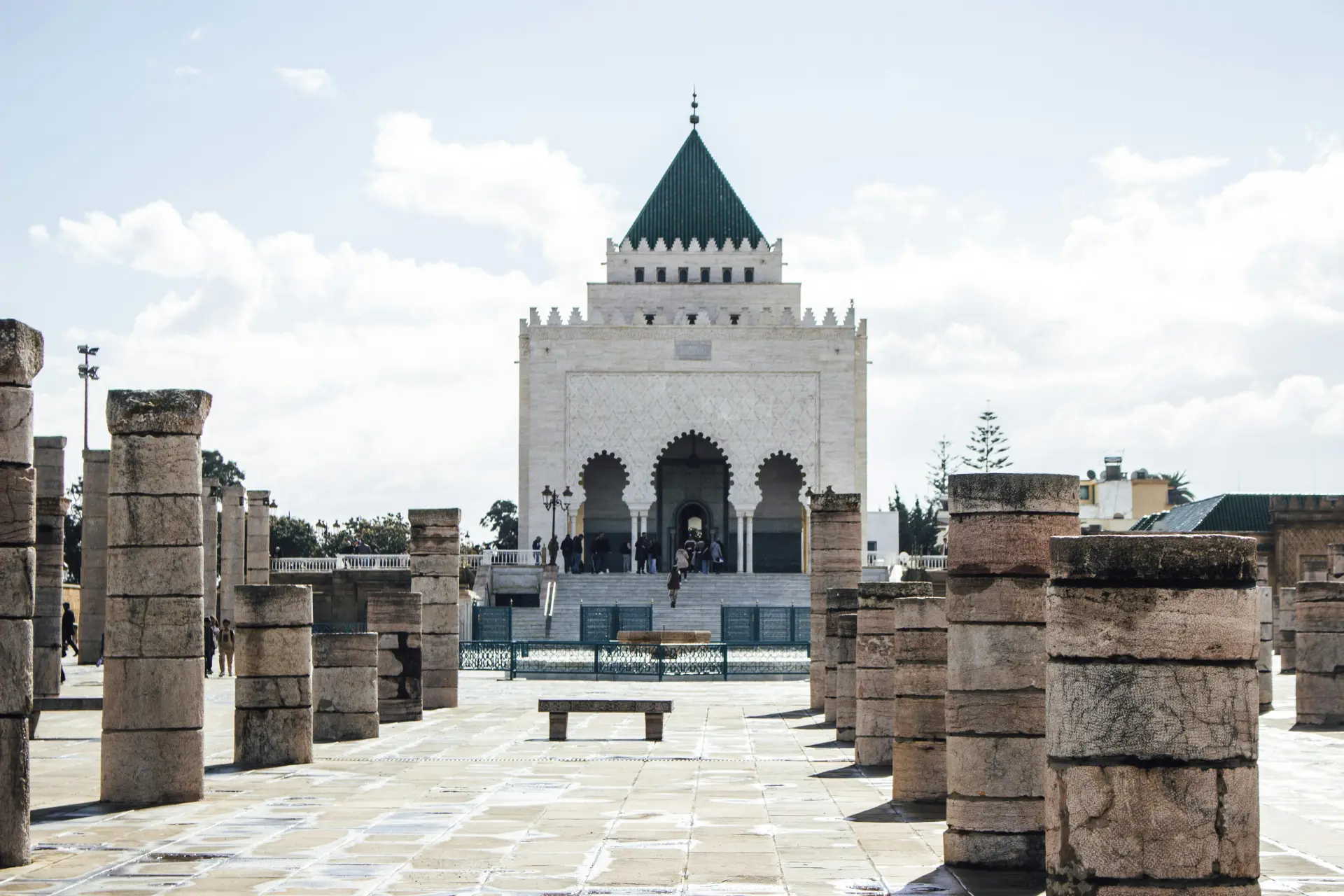
Mausoleum of Mohammed V in Rabat Morocco near Hassan Tower with traditional Moroccan architecture
The Mausoleum of Mohammed V in Rabat, one of the most important historical monuments in Morocco.

Things to Do in Kasbah des Oudayas

Walking through the streets is one of the most enjoyable experiences inside the kasbah. The small alleys are quiet and full of charm, with white houses, blue doors, and walls decorated with flowers. As you move through the narrow streets, you can slowly discover the peaceful atmosphere of this historic place and observe the daily life of the residents who still live there.

Photography is another activity many travelers enjoy while exploring the kasbah. The contrast between the white walls and blue doors creates beautiful scenes around almost every corner. In addition, the views toward the Atlantic Ocean and the Bou Regreg River offer excellent spots for landscape photos, especially from the higher viewpoints near the fortress walls.

A visit to the museum is also worth including during the walk. The Oudayas Museum, located inside a traditional building in the kasbah, displays Moroccan art, jewelry, traditional clothing, and historical objects. This visit helps travelers better understand the cultural history of the region and the importance of the kasbah through the centuries.

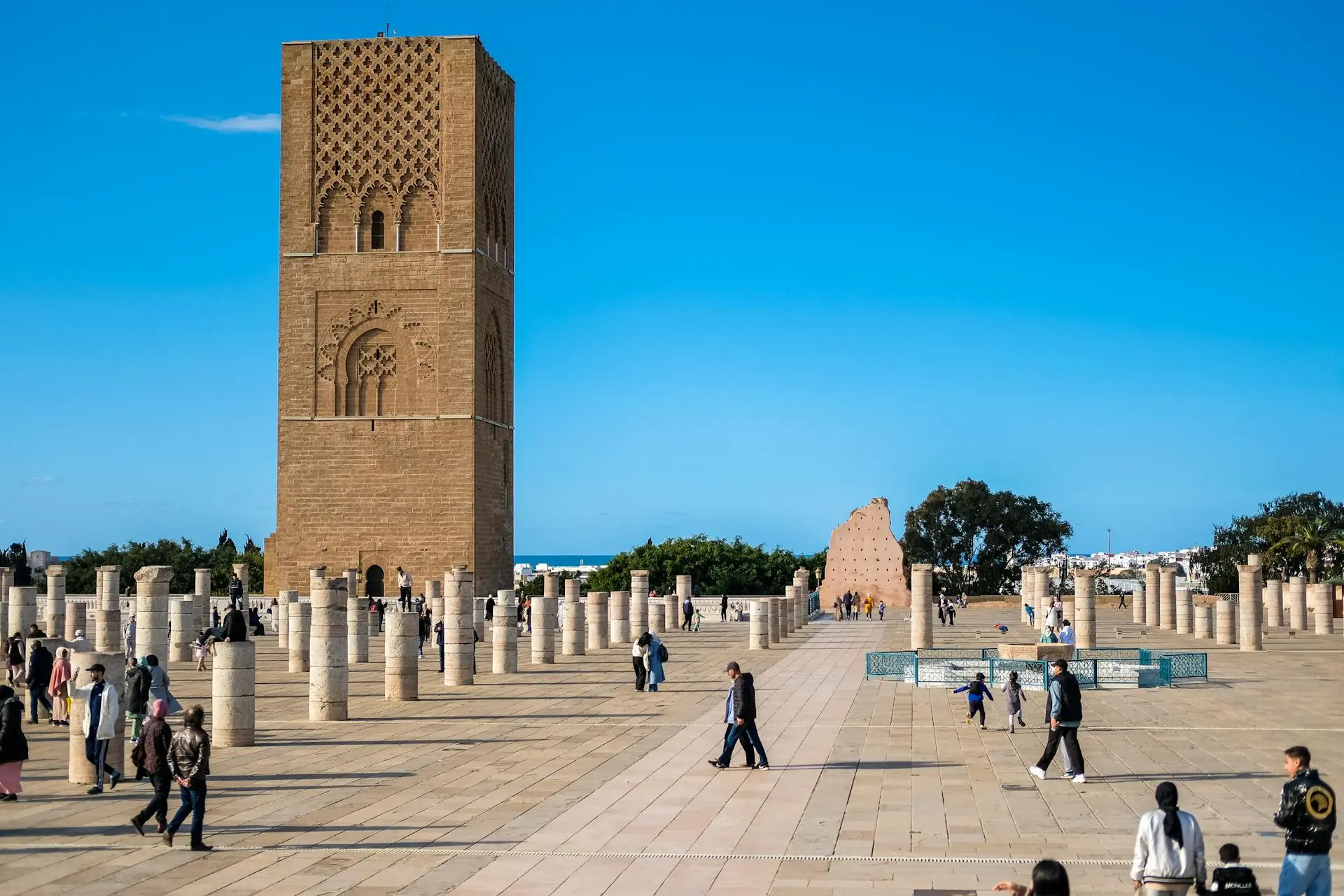
Hassan Tower Rabat Morocco historic Almohad minaret near the Mausoleum of Mohammed V
Hassan Tower, the famous unfinished minaret and one of the most iconic landmarks in Rabat.

How to Visit Kasbah des Oudayas

Kasbah des Oudayas is located in the northern part of Rabat, at the mouth of the Bou Regreg River where the river meets the Atlantic Ocean. The fortress stands on a small hill between the Rabat Medina and the Bou Regreg marina. Because of its central location, it is easy to reach on foot from the medina, by taxi from other parts of the city, or by walking along the marina promenade.

The main entrance to the kasbah is through the historic gate known as Bab Oudaia. Entry to the kasbah itself is free, and visitors can walk through the streets, viewpoints, and gardens without paying a ticket. However, the museum inside the kasbah may require a small entrance fee. The area is open during the day, and travelers can freely explore the streets and viewpoints.

The best time to visit is in the morning or late afternoon. Early in the morning the streets are quiet and the temperature is cooler, which makes it pleasant to walk and explore. Late afternoon is also a good moment, especially for enjoying the sunset views over the Atlantic Ocean and the Bou Regreg River. During this time the light becomes softer, which also creates beautiful conditions for photography.